The Royal Art of Lucknowi Chikankari: From Nawabs to New Age Fashion
Published on November 4, 2025
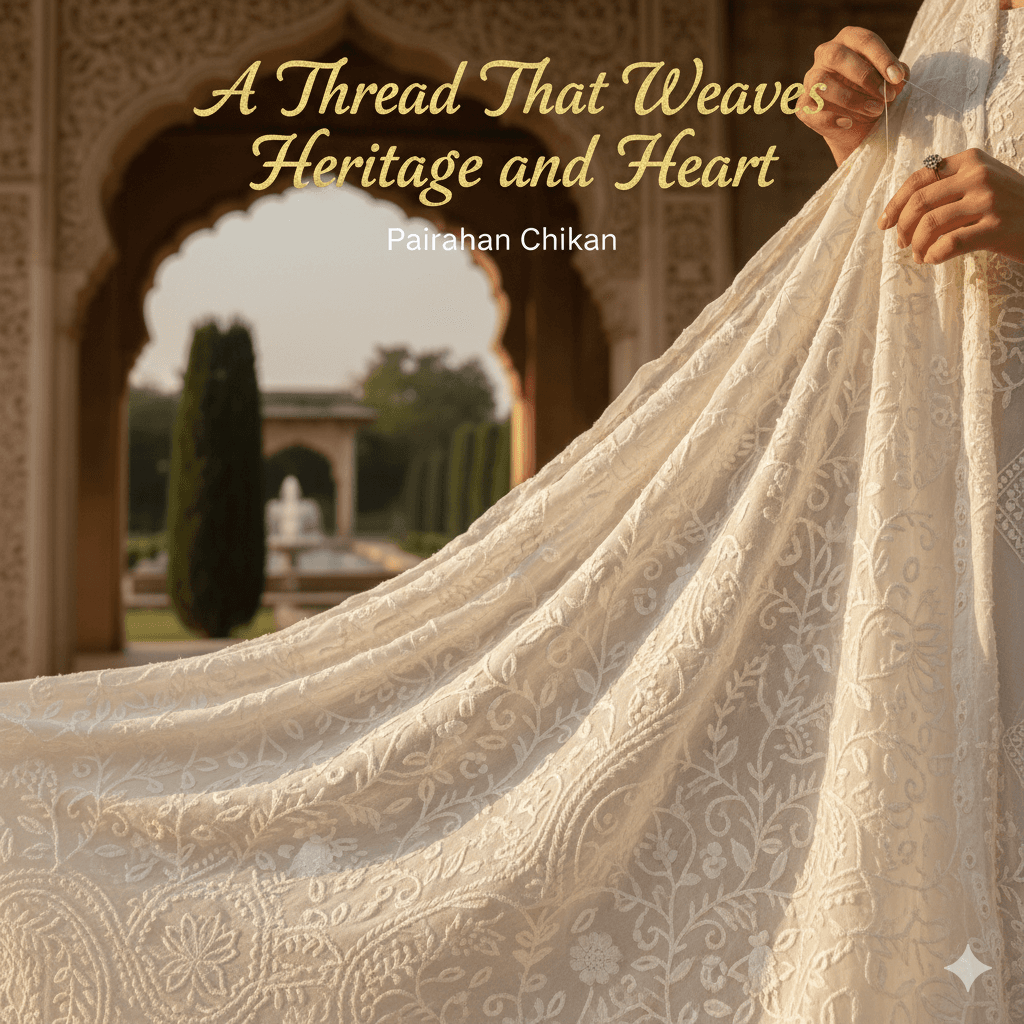
Introduction: A Thread That Weaves Heritage and Heart
There are very few crafts in the world that have survived the test of time with the same grace, purity, and poise as Lucknowi Chikankari. It’s not just embroidery — it’s poetry in motion, a dialogue between the needle and fabric, a reflection of India’s royal past, and a symbol of timeless elegance.
At Pairahan Chikan, we consider Chikankari not merely an art form, but an emotion — a connection between the artisan’s heart and the wearer’s soul. Every stitch carries whispers of Lucknow’s history, its Nawabi culture, and its people’s pride in preserving an age-old legacy.
As fashion constantly evolves, Chikankari continues to remain evergreen. From regal muslin attires of Mughal queens to the modern reyon sets, the embroidery has traveled centuries — gracefully adapting, never fading.
The History: Chikankari and the Mughal Grace
The roots of Chikankari trace back to the Mughal era, more than 400 years ago, when the art was introduced to India by Empress Nur Jahan, the wife of Emperor Jahangir. Renowned for her taste in fine arts, architecture, and textile design, Nur Jahan is believed to have brought the intricate Persian art of “Chikan” — meaning “delicate patterns” — to Lucknow.
Under the patronage of the Mughal court, this embroidery flourished. The Nawabs of Awadh, especially during the 18th and 19th centuries, encouraged artisans to develop Chikankari as part of Lucknow’s aesthetic identity. The city became known for its nazakat (delicacy) and nafasat (refinement) — qualities mirrored perfectly in Chikankari’s gentle threads.
Originally, artisans worked on fine muslin or mulmul, with white thread on white cloth — a subtle expression of elegance, purity, and royalty. The soft pastel tones and nature-inspired motifs mirrored the refined sophistication of the Nawabi lifestyle.
The Meaning of Chikankari: Art in Motion
The word Chikan literally means “delicate embroidery.” Each piece of Chikankari work involves over 32 distinct stitches, carefully embroidered by hand. Some of the most prominent stitches include:
- Phanda – small knot-like stitches resembling grains of millet
- Murri – rice-shaped stitches giving texture to the design
- Bakhiya (Shadow work) – threads done on the reverse side of the fabric, creating a shadow effect
- Keel Kangan – delicate, circular stitches used for floral outlines
- Jali – net-like openwork that gives a lace-like transparency
Each of these stitches requires a different level of skill, patience, and artistry. The perfection of one motif can take hours, sometimes days — and yet the result is so effortless, it looks like the pattern grew naturally from the cloth itself.
The Craft Process: Where Patience Meets Perfection
The making of a single Chikankari piece is a multi-step journey involving teamwork, craftsmanship, and immense patience.
1. Design Creation
The process begins with drawing the design on tracing paper. The motifs are often inspired by Mughal architecture, Persian gardens, flowers, leaves, paisleys, and vines. These designs are timeless and carry centuries of cultural influence.
2. Block Printing
The design is transferred onto the fabric using wooden blocks dipped in a washable dye or indigo paste. This printing guides the embroiderers where each stitch should go. It’s the blueprint of the art.
3. Embroidery by Hand
Now, the magic begins. Skilled artisans — mostly women from Lucknow’s suburbs and villages — start embroidering on the printed fabric. Each stitch is done with precision using cotton or silk threads. This stage can take from 2 days to 3 weeks, depending on the complexity of the design.
4. Washing and Finishing
Once the embroidery is complete, the fabric is thoroughly washed to remove the tracing outlines and starch. It is then ironed, checked for quality, and transformed into stunning Kurtis, Plazzo Sets, Dupattas, or Sarees.
At Pairahan Chikan, we ensure that each product passes through strict quality checks to maintain authenticity and excellence — because every thread deserves respect.
Lucknow: The Heart of Chikankari
Lucknow is not just a place; it’s the soul of Chikankari. Walk through the lanes of Chowk, Aminabad, or Hazaratganj, and you’ll find countless hands working silently, weaving tradition into fabric. For many, it’s not just work — it’s legacy and livelihood.
The craft has been passed down through families — from mothers to daughters, generation after generation. Each artisan adds her own charm, ensuring no two pieces are ever the same.
These women are the real strength of Pairahan Chikan. We take pride in empowering them — providing fair wages, consistent work, and recognition for their talent. Every purchase you make directly supports their livelihood and keeps this heritage alive.
Pairahan Chikan: Redefining Tradition for the Modern World
At Pairahan Chikan, we believe in preserving the roots of Chikankari while adapting it to modern fashion sensibilities. Our collections combine traditional handwork with contemporary fabrics and silhouettes.
We use a range of premium materials — Reyon, Georgette, Cotton, Chanderi, and Muslin — to create comfortable yet elegant outfits suitable for everyday wear, festive occasions, and global appeal.
Whether it’s a Lucknowi Chikankari Kurti and Plazzo Set or a Chanderi Dupatta with Sequence and Siroscy Work, each piece reflects a seamless blend of heritage and modern luxury.
Our artisans ensure that every motif, every thread, and every finish carries the same purity that once graced royal courts.
The Symbolism Behind Chikankari
Beyond its beauty, Chikankari holds deep symbolic meaning. The floral and nature-based motifs symbolize growth, purity, and life. The soft color palette represents grace and simplicity, while the hand-embroidered texture connects the wearer to the artisan’s soul.
In today’s fast-paced world, where machines dominate the fashion industry, Chikankari stands as a reminder that true beauty lies in human touch — in the imperfections, in the patience, in the personal connection of each handmade piece.
Why Chikankari Continues to Rule Global Fashion
The charm of Chikankari has transcended generations and borders. From Bollywood celebrities to international fashion designers, everyone has fallen in love with its soft elegance.
Here’s why it remains timeless:
- Versatility: Perfect for daily wear, office, festive gatherings, and even weddings.
- Comfort: Lightweight and breathable, making it ideal for all Indian seasons.
- Sustainability: Entirely handmade, supporting slow fashion and eco-friendly production.
- Cultural Pride: Wearing Chikankari is wearing a piece of Indian heritage.
- Global Appeal: Its minimalistic beauty fits perfectly into global fashion aesthetics.
Fashion houses across the world now incorporate Chikankari-inspired embroidery in haute couture, showing how a centuries-old Indian art continues to inspire international runways.
Empowering Women Through Threads
One of the most beautiful aspects of Chikankari is its role in empowering women artisans. Many of them work from their homes, balancing family responsibilities while creating magic through their needles.
At Pairahan Chikan, we are proud to provide them with fair opportunities, continuous work, and dignity. Each stitch they create is a step toward financial independence and empowerment.
When you choose Pairahan, you’re not just buying clothing — you’re becoming part of a movement that uplifts women and preserves cultural heritage.
Sustainability and Slow Fashion
Fast fashion might offer instant gratification, but it often comes at the cost of culture, quality, and conscience. Chikankari, on the other hand, represents slow fashion at its best.
Each piece takes time, skill, and care. No two are identical. When you wear it, you wear something alive with the maker’s spirit.
Our brand embraces this philosophy wholeheartedly — from ethical sourcing to sustainable packaging — ensuring that our craft remains gentle on both people and the planet.
How to Identify Authentic Chikankari
With rising demand, machine-made imitations have flooded the market. Here’s how you can spot the difference between authentic handwork and machine embroidery:
- Irregularities are beautiful: Genuine Chikankari will have slight variations; machine work looks uniform.
- Feel the thread: Hand embroidery feels soft and slightly raised on the fabric.
- Reverse side test: The backside of handwork will show tiny knots; machine work won’t.
- Fine detailing: Authentic pieces show intricate patterns with delicate threadwork — impossible to duplicate by machine.
At Pairahan Chikan, every piece is 100% handcrafted — because authenticity is our pride.
Pairahan Chikan: Crafting the Future of Heritage Fashion
Our journey is not just about selling clothes. It’s about reviving stories, nurturing artisans, and sharing India’s cultural pride with the world.
From India to more than 13 countries, Pairahan Chikan by Red Fox Apparels has become a name synonymous with authenticity, trust, and elegance. Each product reflects the same love and dedication that began centuries ago in the royal courts of Lucknow.
Our dream is to see Chikankari reach every corner of the world, worn not just as attire but as an emotion — an experience of wearing art.
Conclusion: A Stitch That Connects Generations
The journey of Lucknowi Chikankari — from the hands of royal artisans to the hearts of modern fashion lovers — is a living example of India’s enduring artistry. Every stitch holds a piece of history, a whisper of culture, and a touch of the divine.
At Pairahan Chikan, we are honored to continue this legacy — weaving past, present, and future into one timeless fabric.
So, the next time you wear a Chikankari Kurti, Dupatta, or Set, remember — you’re not just wearing a garment.
You’re wearing centuries of skill, emotion, and soul.
✨ Experience the Royal Art. Wear the Legacy. Shop Pairahan Chikan today.